
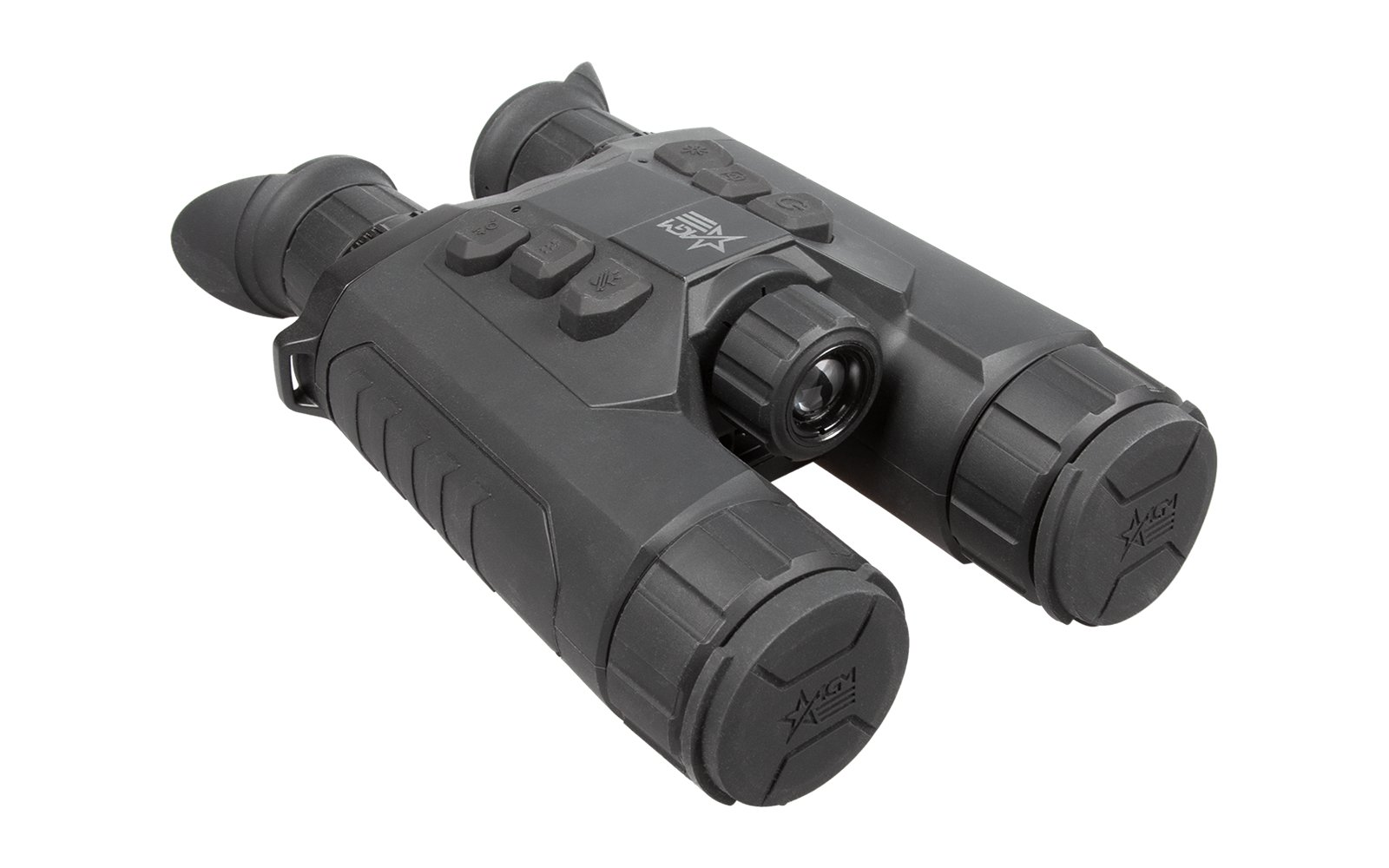
The AGM ObservIR LRF 25-256 is a handheld thermal binocular with a 4K day/night camera and a built-in 1,000-meter laser rangefinder. Find the heat with the thermal, confirm what it is with the day/night camera, and range it before you ever take a step. Big Mike runs this one himself: it's the value pick of the ObservIR line and does the job for ranchers and hog hunters working pastures, feeders, and fence lines after dark.
256 vs. 384 vs. 640 vs. 1280: What the Numbers Mean
The number is the width of the heat sensor in pixels. More pixels means more detail: a 384 has about 2.25 times the pixels of a 256, a 640 about 6.7 times, and a 1280 about 27 times. Every model will detect a warm spot a long way out; extra pixels matter most when you need to identify it at distance (hog, deer, or calf?). Digital zoom on a 256 enlarges the pixels you already have, so the picture gets blocky sooner when you zoom in.
Bottom line: the 256 is plenty for the distances most Texas ranch hunting happens at, and it costs a fraction of the bigger sensors. If you regularly need a positive ID across big open country several hundred yards out, the 384 or 640 is worth the step up; the 1280 is for folks who want maximum detail and don’t mind paying for it. Every ObservIR LRF has the same 1080p display, 4K day/night camera, 1,000 m rangefinder, and IP67 rating.
- 25-256 (this one): 256×192 sensor, 25mm lens, 4.5x base, 1,200 m detection
- 35-384: 384×288 sensor, 35mm lens, 4x base, 1,800 m detection
- 35-640: 640×512 sensor, 35mm lens, 3x base, 1,800 m detection
- 50-640: 640×512 sensor, 50mm lens, 4.5x base, 2,600 m detection
- 60-1280: 1280×1024 sensor, 60mm lens, 2.5x base, 3,100 m detection
Product photo: AGM Global Vision. Specs per the manufacturer; call to confirm the exact model in stock.